Here is a "software as a floor mosaic" metaphor: let's say we need to inlay a floor mosaic. We have a sketch or may be even a highly detailed plan of how the thing has to look like, and even the vision of it and clear and perfect, something like this:

We also have at our disposal assorted pieces of stone, ceramic patches, coloured sand and all the tools we might need. But no matter what tools do we have, it takes experience and above that a lot of time to make such a mosaic. Yes, experience helps but we still need to take each piece, adjust it, finish it and put it in place. Sometimes the piece will crack in our hands and we have to start over. Sometimes, a piece will be very different from what's needed in that particular spot and require much more work than another.
But then there is time pressure - the worst of all curses. Pressed with time we have the following alternative: to make it faster, we might take bigger stones and throw them in quickly yielding something like this:
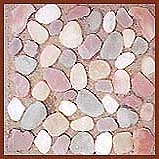
And it may even sort of look similar, but I just can't force myself to see the plan in the implementation. Aesthetically, at least, it's obvious that mosaic laid out in this fashion is no match to the envisioned one. But how did our big stone practice made it break ?
In other words, what can we say about big stone mosaics ?
Good:
Bigger stones are by definition fewer, so we have to invest less in learning. The less stones we have to learn how to deal with, the more confidence we have in that we know how to handle them properly.
There is less variance between big stones, consequently there is no choice as to which stone pick for this or that spot - one less burdening decision to make.
Takes fewer pieces to lay the mosaic out. And it saves time, this is precisely the reason we choose this way.
The less pieces, the less interaction between pieces (although I must admit, this is really more a software insight).
Bad:
UGLY. There are situations in which big stones fit in precisely, but those are exceptions, rather than rules. If we are up to a piece of art, not to the standard kitchen tile. This is the aesthetics-breaking reason. This is why the first one is amazing and the second one is not even satisfactory.
Along the same lines of aesthetics and taste goes this - if someone is always doing big stones, how could she tell what's beautiful and what's not ? It's still a mosaic, isn't it ?
Bigger stones obviously not always fit and we have no control over it. If we want control after all, we need to apply much more work compared to what would have needed if we were combining smaller ones from the start (that's exactly the reason why mosaic exists - we take small patches and combine them in a such a way that the whole thing looks beautiful from some distance, and don't spend forever cutting).
A mosaic built of bigger stones is less reliable (alhtough again, it's more of a software insight). We may be confident, but there is no way we can tell a crack inside a big stone, and if it happens to exist, we have no control.
And so, what's the average stone size modern software mosaics are being built of, what do you think ?


 Previous Topic