This post originated from an RSS feed registered with Python Buzz
by Aaron Brady.
Original Post: Title Goes Here (Identity, Necroblogging, Share Cropping)
Feed Title: insom.me.uk
Feed URL: http://feeds2.feedburner.com/insommeuk
Feed Description: Posts related to using Python. Some tricks and tips, observations, hacks, and the Brand New Things.
I’ve wanted to write this post for a while, and I’ve struggled because it’s
really three topics that are intertwined in my head:
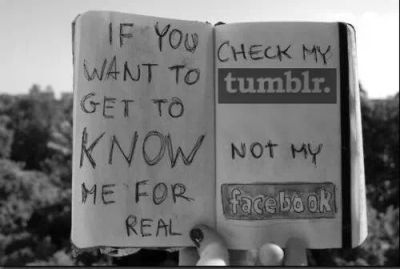
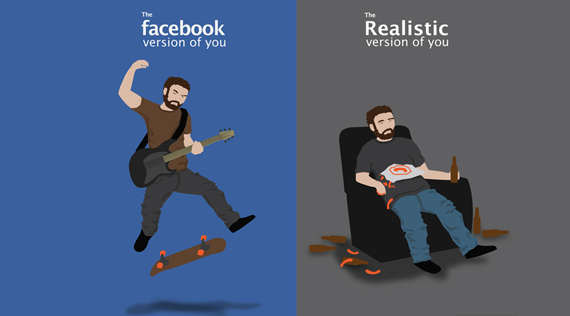
Identity on the Internet is prismatic1, Facebook is failing to deal with
that and we’re slowly cycling back to a decentralised and pseudononymous
Internet.
Blogging isn’t dead: Tumblr and Twitter are not some separate species.
“The Web of Yore” barely existed for most of the real world. We have always
been digital share croppers and if you don’t believe me, you should
ask Archive Team
Google get lots of heat over this because while technology-types are
happy to assume that Facebook will be evil, once upon a time Google
were pretty proud of doing the right thing. And that right thing
was mainly swayed by what their own, smart people thought.
I’m a fan of Twitter (also ADN, just sayin’) and I used to
be fond of the phrase “Facebook is for people you’re friends with, Twitter is
for people you want to be friends with”.
Users can create identies on Tumblr, Twitter, Kik, use them with one group of
friends, or throw them away. Users of Snapchat can use the service for
more than sexting3, knowing that whatever they do on there isn’t forming
part of some permanent record.
People have more than one identity they present to the outside world:
I for one could not be happier that the IRC logs from my teenage years are not
available online. At least, not with my identity attached to them.
Out of tens of thousands of Internet users in Ireland in those pioneering days
I ended up in a ~200 person IRC group with someone I happened to go to school
with. Neither of us knew this until I went to a meet in St. Stephen’s Green.
That seems perfectly reasonable to me. I’m certain that the person that I was
becoming — separate from school and family — would have been curtailed if I
actually knew that I knew someone on IRC in “real life”.
When I was on Facebook, I immediately started to feel like I was back at school.
Everyone wants to make themselves look better on Facebook, it’s natural,
especially when the people you have on there are distant-not-quite-friends —
people you knew from school or college or previous jobs, but who weren’t
important enough to keep in touch with in any meaningful way, so you
just like their Candy Crush updates.
I have two Google accounts, because the personalisation that Google more-or-less
forces on you is inappropriate. Do I want video suggestions from my personal browsing
popping up while I use YouTube for work purposes? (There are work purposes). No.
Do I want to be bombarded with Magento development news when I’m killing
time on the Internet at 2AM? Also: no.
People need pseudonyms to explore parts of who they are. Vent about things
in their life. Discuss their addiction problems or self harm with
a group of people that won’t judge them and a way that doesn’t bleed
into their “real life”4.
He acknowledges in the piece that lots of blogginess has influenced most things
that have come afterwards, but still goes on to call blogging dead- in the
sense that very few people starting out today on Twitter or Tumblr would
consider what they are doing to be blogging.
The other two legs of the argument are that referrals from blogs are way down
compared to “social media”5 and that the chronological list view, as
pioneered by the weblog, is dying out in favour of algorithms picking
the most popular things on Facebook; and Pinterest and Digg (Digg!) using
a grid.
Those things are fine and arguably true, but I think it takes a 1997-2000
mindset to think that blogging (putting things on the Internet, more or less
organised by date) is inexorably tied up with this other stuff (RSS readers,
list views, hosting your own web site).
Tumblr is a blogging platform. End of. Lots of people just reblog (note the
verb) cat pictures and pornography, but a massive amount of people are
keeping their diaries online, just like with blogging, just like with
LiveJournal.
Oooh ooh ooh. For the triple: that brings me on to my last part!
People are creating content locked into walled gardens, and then those
walled gardens’ commercial interests are coming along and much of that
content is threatened or lost.
Looking at the downsides of this really misses the point, the positive
thing that we should take away from this, because it’s been happening
since Geocities in the 90’s: even though companies take the stuff you
make, put their name on it, sell adverts next to it and maybe even
delete the stuff on short notice — they give regular people a place
to create things on the Internet, without the colossal investment in
time required to even set up a basic WordPress.
Tumblr is 100% the next Geocities. It’s entirely down to point of
view if you think that’s good or bad.
The three men met up via an internet chatroom, way before meeting in
person, or “IRL” (In Real Life) as the court judges call it and “AFK”
(Away From Keyboard) as Peter Sunde calls it. Sunde believed that “the
internet is for real” and that going out and actually meeting someone
was being away from the internet rather than in real life.


 Previous Topic