This post originated from an RSS feed registered with Agile Buzz
by Martin Fowler.
Original Post: Bliki: AlienatingAtmosphere
Feed Title: Martin Fowler's Bliki
Feed URL: http://martinfowler.com/feed.atom
Feed Description: A cross between a blog and wiki of my partly-formed ideas on software development
There are many factors that lead to the troubling
DiversityImbalance that we find in the software
community. Some of these, like the problems in teenage education
that discourages girls from STEM subjects is a long term problem
where our profession can't play a central role in fixing [1]. But one factor that comes down directly to us is
the alienating atmosphere that hangs over the tech community.
One of the hardest things about talking about this alienating
atmosphere is that it's something that's experienced very
differently depending on who you are. For most middle-class white
guys like me, it's something we've rarely experienced. Yet for
many people in HistoricallyDiscriminatedAgainst populations it's a
constant indication that "you're not welcome here".
One of the sharpest technologists I know is a woman who has been
in the industry for a long time, much of it in technical leadership
roles. There's nobody I'd rather have at my side in an important
architecture meeting or reviewing a draft of mine that's veering
into deep language theory. Yet she still says that she feels a
reaction as she walks into a gathering of techies where nearly every face
is different to hers, a little voice saying "this place is not for
you". If such a reaction still strikes someone as accomplished as
this, we shouldn't be surprised to see it elsewhere.
That basic reaction is set off just by the disparity in numbers,
which is a long term problem to solve - but it can amplified by
things within our short term influence. Sexually-oriented jokes tend
to reinforce a men-only locker-room atmosphere which many women do
find alienating. Many women have had real incidents of harassment,
such jokes remind them of that. And although the chances of a
serious incident are slim, they are not zero. [2]
If you have any doubt about how ugly this can get, just peruse
the comments on a blog or news entry whenever this kind of thing
comes up. The bile that falls on people who criticize
alienating incidents is both vile and sadly predictable. Ironically
the bilers often complain about censorship infringing their right to
make sexual jokes, but not acknowledging that fear of the intermobs
imposes its own censorship. I know several articulate women who will
not post their opinions because they don't want to have to deal with
this inevitable backlash.
There's an important asymmetry here. I've occasionally been on
the receiving end of some nasty satire, but that's not such a big
issue for me because I'm in a position of relative influence in the
software world as well as part of a historically powerful group. For
people from historically-discriminated-against (HDA) populations the
dynamic changes. Such attacks reinforce the history of exclusion and
oppression, and trigger fears of physical attack. Merely the fact
that people think it's ok to make such attacks makes it clear that
"your kind is not welcome here".
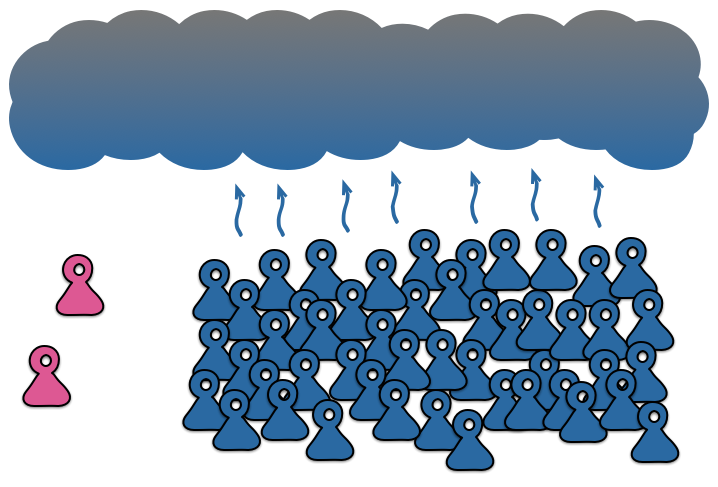
Trying to clear internet atmosphere of this feels like trying to
deal with global warming - what can we do?
A first start is just to be aware that different people will
react differently to the same things. One person might not find a
remark offensive while it really hurts someone else. A phrase I've
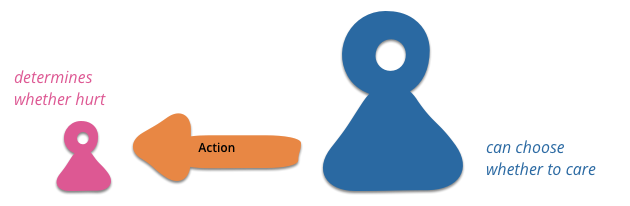
found useful in the past is
I can't choose whether someone is offended by my actions. I can
choose whether I care. If someone reacts in an hurt way to
something I say, I don't get to say "you can't be offended by that".
Their reaction is a result of their life experiences, which will be
different to mine. Often HDA people gets lots of these small hurts,
individually they don't mean much - but the sheer
quantity has a big cumulative effect.
While I can't tell someone if they should be hurt or not, I can
choose whether I care about the hurtful feeling. And it is a choice.
I have offended some people when I've said we should treat gay people
equally. In that case say I don't care very much. It's my choice
that I'm not concerned about hurting the feelings of homophobes and
I accept responsibility for that decision.
I do care, and think we as a profession should care, about this
kind of thing with HistoricallyDiscriminatedAgainst
groups. Correcting these long-term discriminations takes time, and
can't be solved by just saying "we're all equal now". An alienating
atmosphere against women, both in our profession and on the wider
internet, reinforces an injustice that's been perpetrated for
thousands of years. While I cannot be responsible for what my
ancestors did, I can take responsibility to play what small part I
can in cleaning up their mess.
I don't find it straightforward to learn about what causes
alienation and how to avoid contributing to it. I try to pay
attention to incidents when they come up and to listen to those who
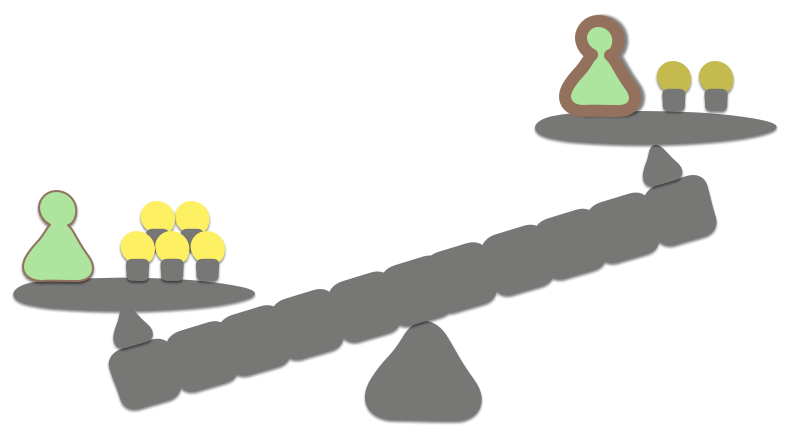
feel attacked. Not all women are alienated by an act, so I have to
make a judgement about what proportion of people are going to react
- is it just this one person, or is this individual the only one of many who
felt brave enough to speak out?
I've found it valuable to find people who I can
confidently talk to about these issues, and I certainly recommend
searching out a few people who can act as guides. It's important to
get a variety here, as different people react differently - it's
easy to miss things by generalizing from opinions that are too few
or not diverse enough. I feel that these steps have increased my awareness
over the years, but it's far from being a territory I can be
confident in.
Once we can begin to sense the alienation in the atmosphere the
next step is to try to create environments with cleaner air. An
example is how many conferences now have code of conduct policies
designed to spell out that certain behaviors are not good manners.
They can (and must) reinforce this by making it easy for people to
make complaints and dealing with them swiftly and fairly. Yes, there
is a risk that specious complaints will be made, and these are
frustrating, but in practice the problems due to these are much
smaller than the problems that never get reported. [3]
One question is what people in the majority groups should do when
they detect some miasma in the air. If I hear a bunch of guys making
sexual jokes in clear earshot, should I intervene? I don't find this
an easy question to answer. I don't have high confidence in my
ability to detect whether a group I care about is going to be
offended by things that I personally don't find offensive, so I'd be
reluctant to overreact myself.
But I agree with the notion that the standard you
walk past is the standard you accept. Many women are sick
of complaining about this kind of behavior because these
complaints often only lead to more trouble. So I think it's
important for all of us to battle against this miasma, to intervene
when someone is fueling the bad air and to support someone's right
to speak up and say they are feeling excluded.
So I believe I have the responsibility to act when such
things happen but I say this with trepidation, I have that British
thing about wanting to avoid fuss-and-bother, so my natural
inclination is to let things go when I'm feeling offended. I know
that even in the last few years I've missed opportunities to speak
up when I should, but I know that I should not let that stop me from
doing better in the future [4]. We must change this culture of silence.
In particular we must avoid supporting this alienating
atmosphere. Sadly such support appears when people attack those who
are trying to fight it. Often women who complain about alienating
incidents are told to "grow a thick skin". I find this kind of
support for NetNastiness deeply annoying.
I value people with good ideas and don't consider the thickness
of their skin. Anyone driven away from expressing innovation or
writing excellent code is a loss to all of us, however unoffended
we think they should be.
Further Reading
Amanda Hess gives a sad but worthwhile summary of attacks
against women online. These are wider than just within the tech
community, but are typical of what women have to deal with here too.
Ashe Dryden writes about the risks and
rewards of speaking up to oppose the alienating atmosphere in
tech. The post includes responses to common misconceptions and suggestions
of how to help.
Notes
1:
There are a number of initiatives out there to encourage HDA
teenagers to get involved in programming, such as Black Girls
Code and Technovation Challenge.
2: Fear of physical attacks
Physical attacks are rare, but not negligible. Recent
statistics in the US indicate that 2 per thousand women
suffer rape or sexual abuse each year (4 per thousand for
younger women). Another survey
focusing on college women found 35 women per thousand per
year suffered sexual victimization in college.
It's also important to note that the fear of an attack, even
if irrational, is still a factor. I've heard women say that even
if they are very sure intellectually that there isn't a threat
of a physical attack, the debilitating emotion is still there.
These reactions come from triggers that are deeply
ingrained in our culture.
3:
The best study into this that I could find indicated that false
report rate was somewhere in the range of 2-8%
4:
It's difficult talk about what to do because different
cases are so varied. Even with a specific example, I frequently
find myself at a loss. I've often thought
about what action I should take if I found myself in an audience for
a talk that uses sexual imagery to illustrate its concepts. I know I
should do something, but I confess that I'm unsure what it
should be - which gives me little confidence that I'd do the right
thing.
Pink and Blue
When preparing the illustrations for the article, I puzzled
a good bit about whether to use the pink and blue colors you
see here. Many people, including me, object to the gender stereotyping
of these colors and I don't like to reinforce it. But in the
end I felt that using the gender
associations of these colors helped the illustrations
communicate better (as opposed to using more neutral colors). I
also tried using light and dark brown in a similar way (as the
alienating atmosphere is true of race too) but pink/blue scheme
provides more striking color.


 Previous Topic